Behrens Science Museum Science History

What Europe was taught about natureSnapshots from the textbooks, 1275–1900

Behrens Science History reconstructs what students were taught about the natural world at intervals across six centuries. Each snapshot reads the courses most often printed in its day, takes its topics from their tables of contents, and reports their doctrine in their own terms, with the evidence they gave for it.

Where schools disagreed, each side is set out with the reasons it gave. Every claim cites the page, and every page links to a public scan.

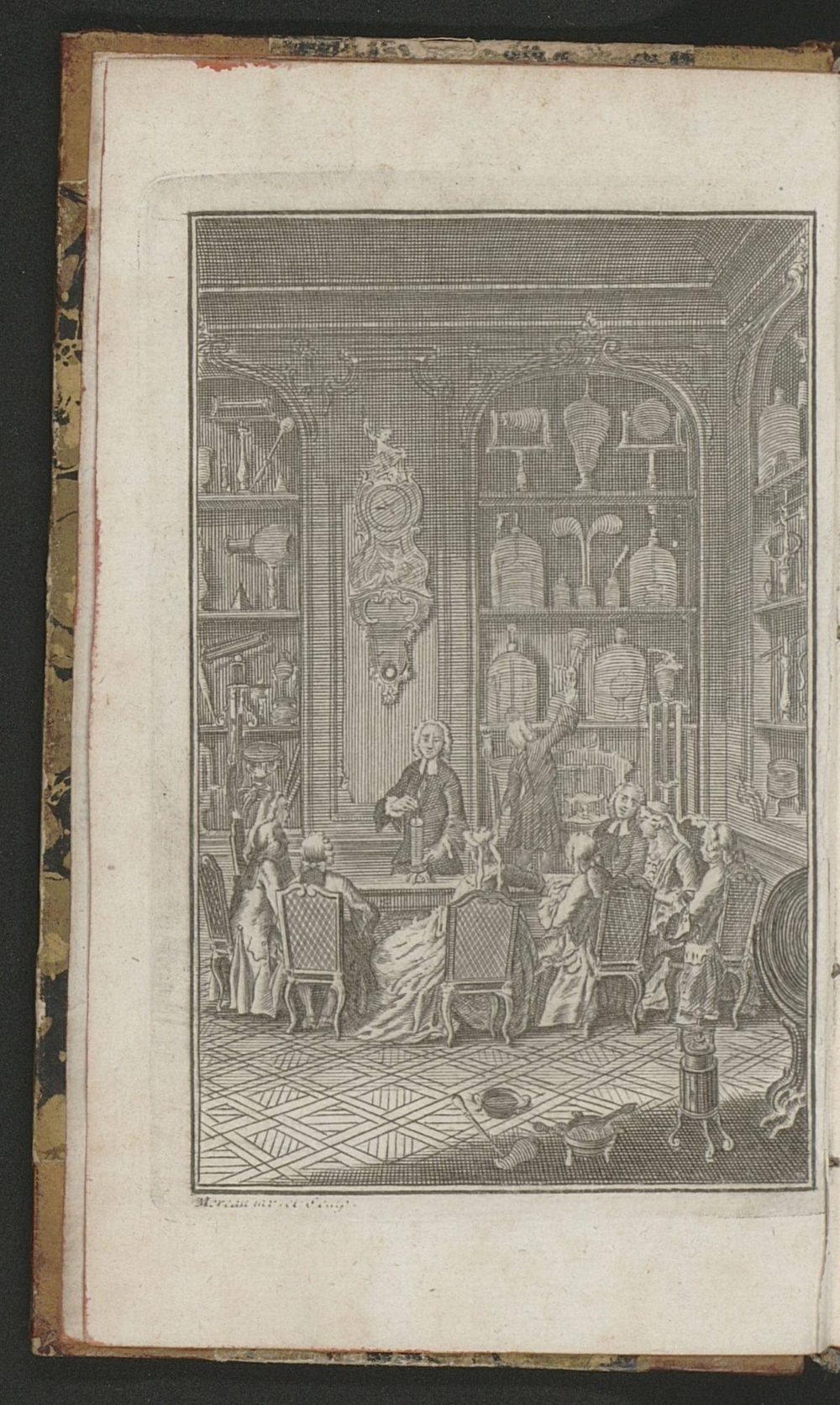
Engraving of an eighteenth-century physics lecture: a teacher at a table demonstrates an instrument to seated men and women, before tall cabinets of glass vessels, air pumps and other apparatus.
Jean-Antoine Nollet’s lecture room, the frontispiece to his Leçons de physique expérimentale (Paris, 5th ed. 1759), the Paris text of the c. 1775 snapshot.

Eighteen snapshots

One every fifty years from 1275 to 1625, then one every twenty-five years to 1900. The first series, in red, covers natural philosophy at c. 1575, c. 1675 and c. 1775.

  1. 1275
  2. 1325
  3. 1375
  4. 1425
  5. 1475
  6. 1525
  7. 1575Texts chosen
  8. 1625
  9. 1675In progress
  10. 1700
  11. 1725
  12. 1750
  13. 177513 topics published
  14. 1800
  15. 1825
  16. 1850
  17. 1875
  18. 1900
  • Published
  • Texts chosen, reading under way or to come
  • Planned
  • 1775First series

The first series: natural philosophy

Natural philosophy changed shape across these two centuries. In 1575 it still took in the soul, plants and animals, the weather, and the heavens as a fifth element. By 1775 it was the physics of inanimate nature, and minerals had gone to natural history or chemistry.

So each snapshot takes its topics from its own textbooks, not from a modern list, and the same subject can turn up under different headings, or under none.

c.1575

Courses printed 1560–1590

Texts chosen. Reading has not begun.

Natural philosophy is still Aristotle’s, taught as commentary and compendium. The topics will come from the books themselves; François Titelmans’s twelve books run from principles, causes and motion through generation, meteors and the heavens to the soul, the senses, the intellect and the will.
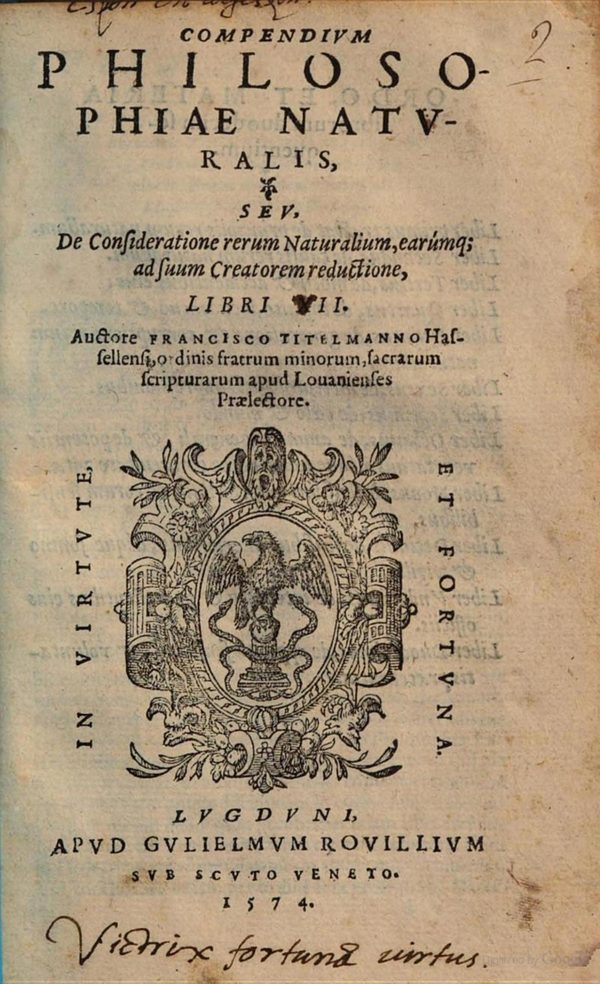
  • Title page of Titelmans, Compendium philosophiae naturalis, Lyon 1574
    FranceFrançois Titelmans, Compendium philosophiae naturalis, Lyon 1574
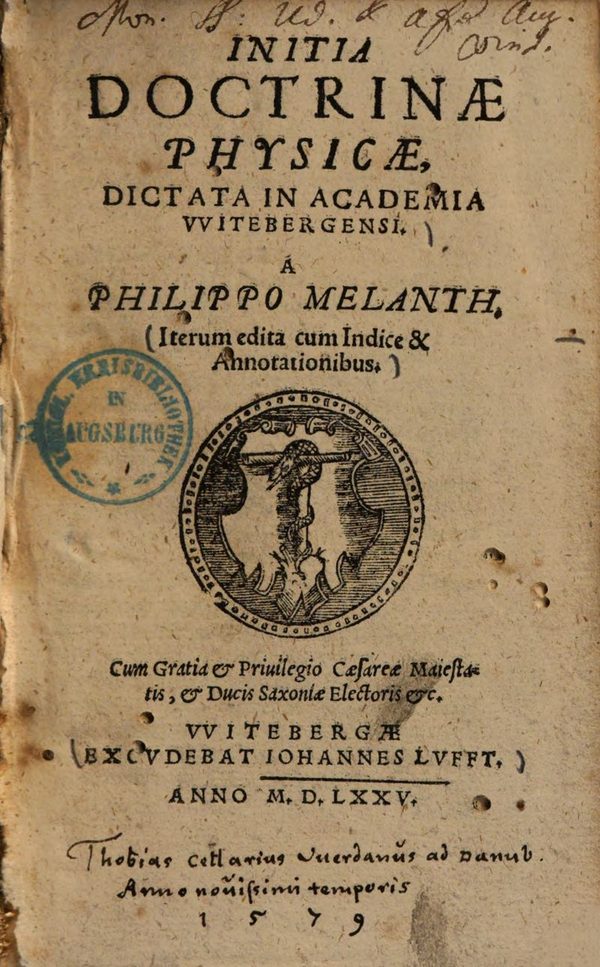
  • Title page of Melanchthon, Initia doctrinae physicae, Wittenberg 1575
    Protestant German landsPhilipp Melanchthon, Initia doctrinae physicae, Wittenberg 1575
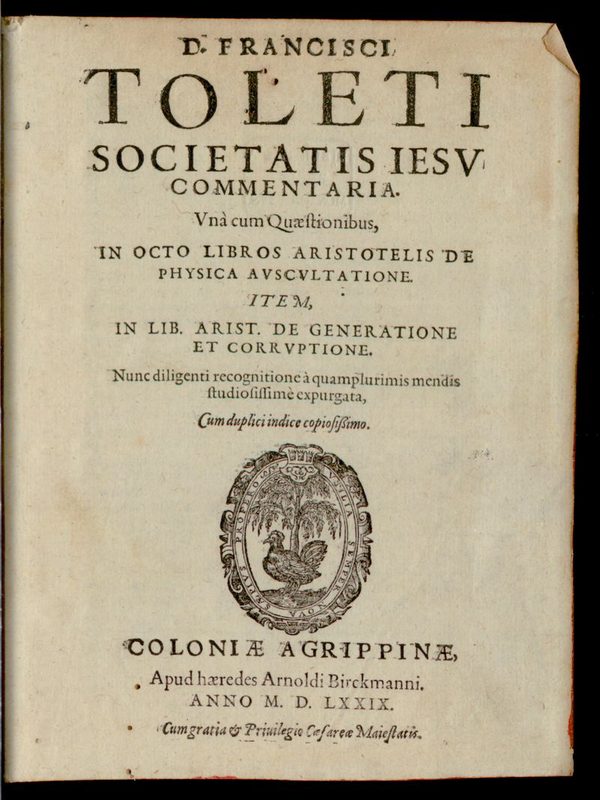
  • Title page of Toledo, commentary on Aristotle's Physics, Cologne 1579
    Catholic German landsFrancisco de Toledo SJ, Commentaria in octo libros Aristotelis de physica, Cologne 1579
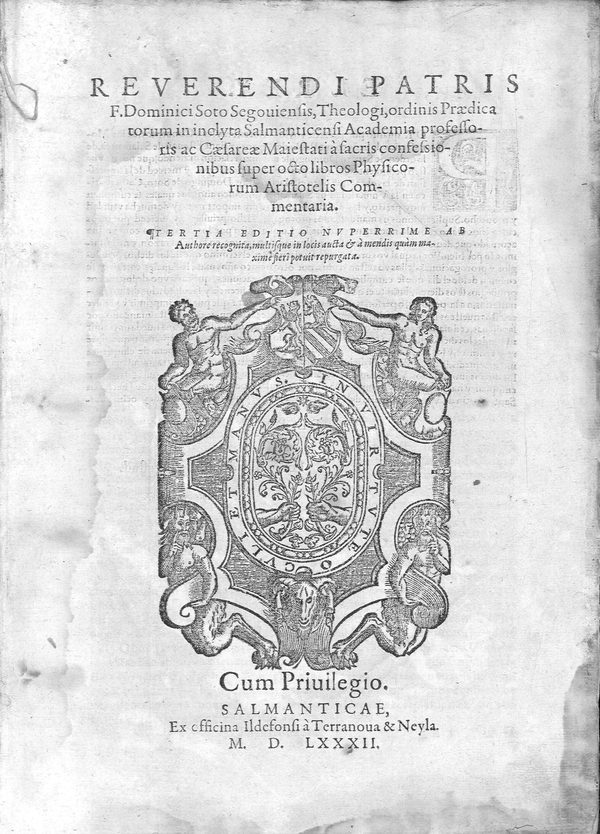
  • Title page of Domingo de Soto, commentary on Aristotle's Physics, Salamanca 1582
    In place of the British IslesDomingo de Soto OP, Super octo libros Physicorum, Salamanca 1582. No natural philosophy course was printed twice in Britain in these years.
c.1675

Courses printed 1660–1690

In progress. One of 25 topics written: light and colours.

Read c. 1675

Descartes’s physics against the schools. Two of the four most-printed courses are Cartesian, one in Paris and one, by a Franciscan, printed in London for use at Cambridge; the others are a Lutheran course from Wittenberg and a Dominican course that follows Thomas Aquinas.

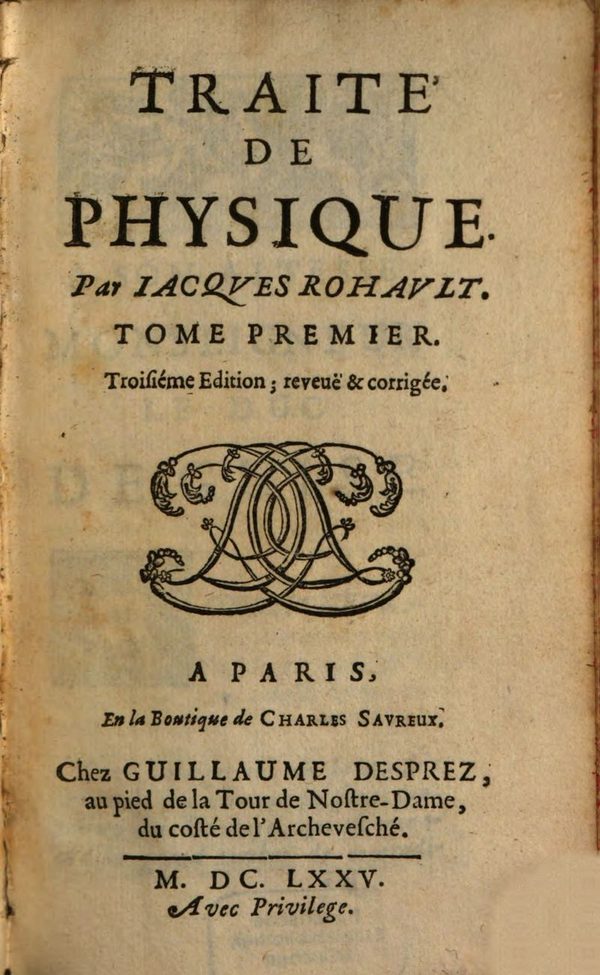
  • Title page of Rohault, Traité de physique, Paris 1675
    FranceJacques Rohault, Traité de physique, Paris 1675
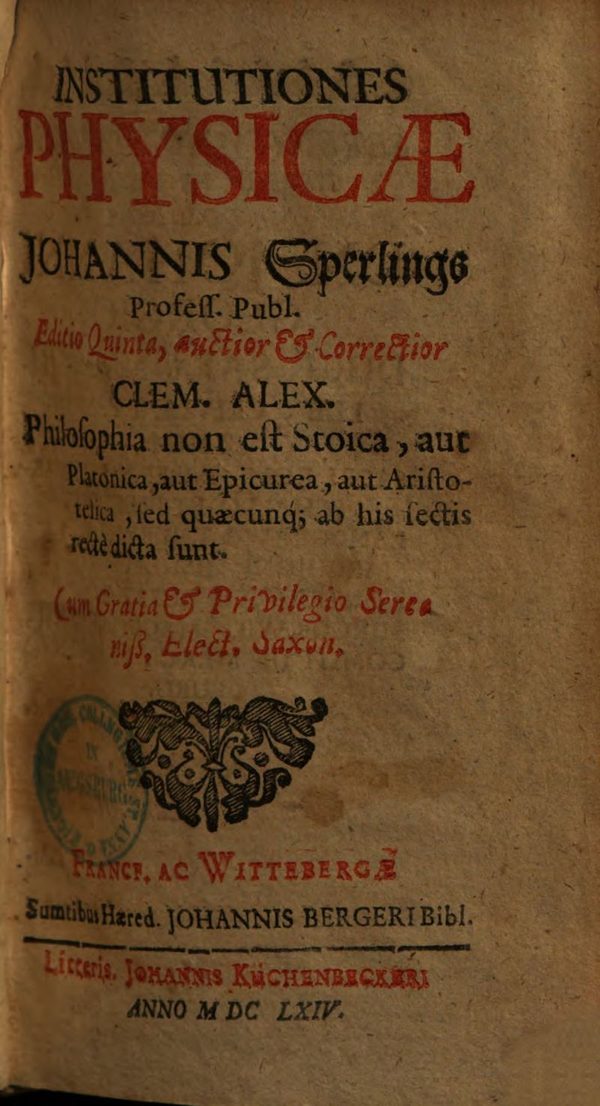
  • Title page of Sperling, Institutiones physicae, printed in red and black, Wittenberg 1664
    Protestant German landsJohann Sperling, Institutiones physicae, Wittenberg 1664
  • The scanned volume has no title page
    Catholic German landsAntoine Goudin OP, Philosophia iuxta Divi Thomae dogmata, Cologne 1681
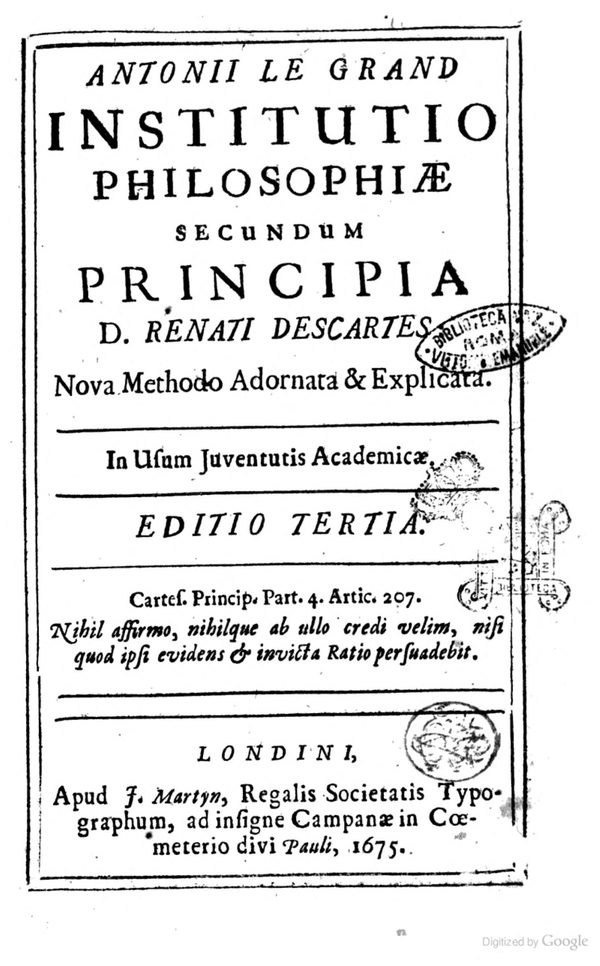
  • Title page of Le Grand, Institutio philosophiae secundum principia Renati Descartes, London 1675
    British IslesAntoine Le Grand, Institutio philosophiae secundum principia Renati Descartes, London 1675

c.1775

Courses printed 1760–1790

Published. All thirteen topics, each on one text per region.

Read c. 1775

Newton everywhere, on different terms. A Jesuit in Graz teaches attraction without reserve; the Paris lecturer keeps a subtle matter and calls attraction a name for an unexplained fact; the Göttingen professor weighs the systems and often declines to choose.

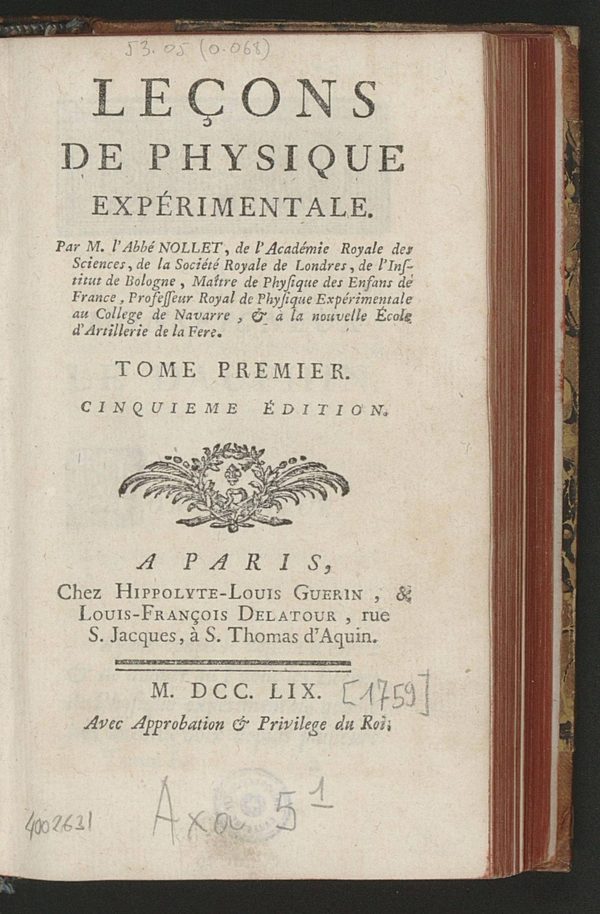
  • Title page of Nollet, Leçons de physique expérimentale, volume 1, Paris 1759
    FranceJean-Antoine Nollet, Leçons de physique expérimentale, Paris 1759–1766
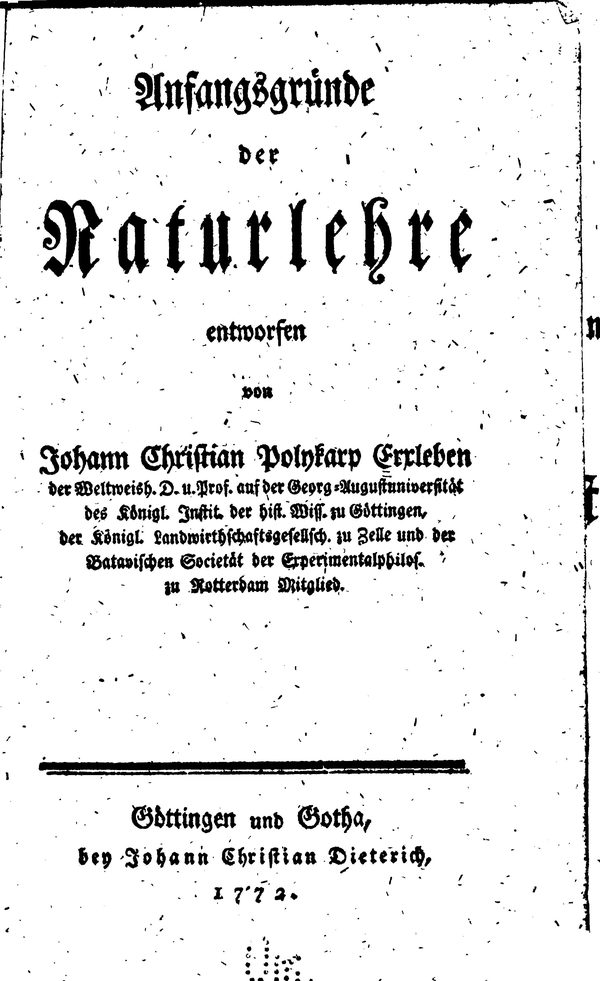
  • Title page of Erxleben, Anfangsgründe der Naturlehre, Göttingen 1772, in Fraktur
    Protestant German landsJohann Christian Polykarp Erxleben, Anfangsgründe der Naturlehre, Göttingen 1772
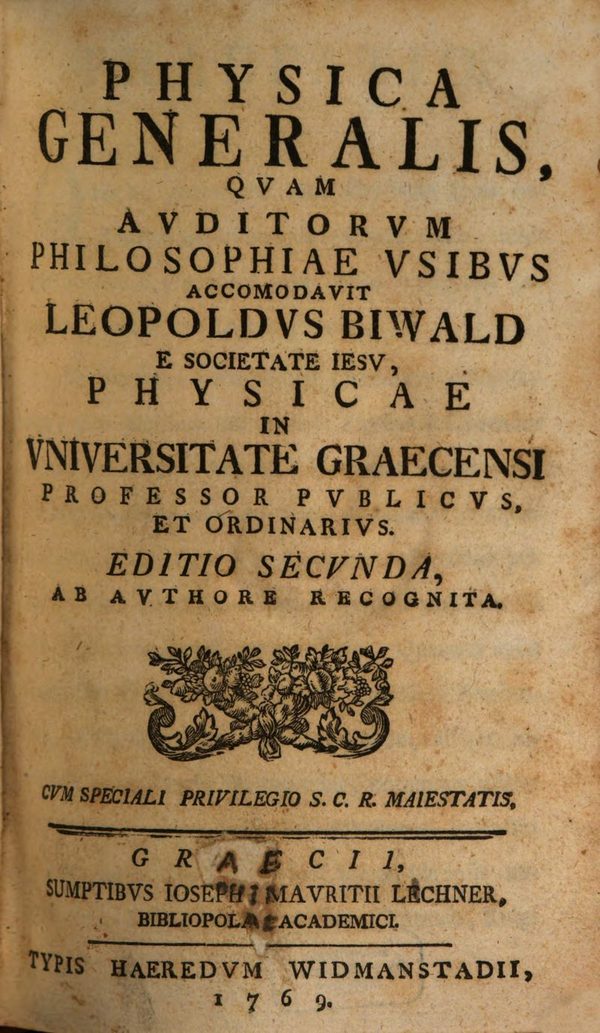
  • Title page of Biwald, Physica generalis, Graz 1769
    Catholic German landsLeopold Biwald SJ, Physica generalis and particularis, Graz 1768–1769
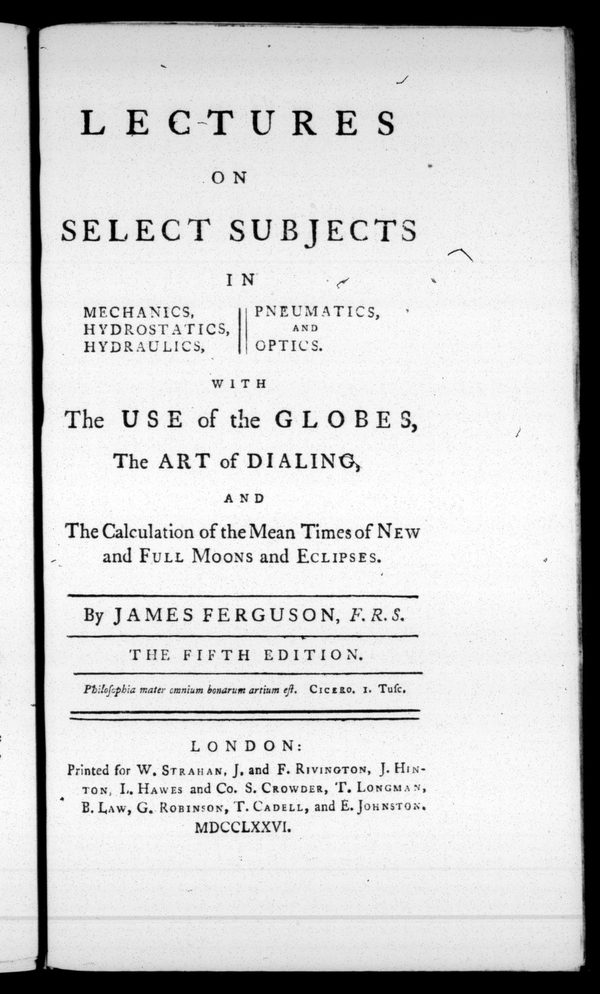
  • Title page of Ferguson, Lectures on Select Subjects, fifth edition, London 1776
    British IslesJames Ferguson, Lectures on Select Subjects, London 1776

One question, four answers

What is light? In 1775 the answer depended on where you studied.

Graz

Biwald, Jesuit course

Particles thrown off by shining bodies, as Newton taught.

Edinburgh

Encyclopaedia Britannica

The same: Newton’s emission of particles.

Göttingen

Erxleben, Lutheran university

Vibrations of an aether, after Leonhard Euler.

Paris

Nollet, public lectures

Motion in a subtle matter filling space, in the manner of Descartes; the same matter as fire.

The same question will be put to the texts of 1675 and 1575. It is one of 183 questions so far, each worded so that it can be asked of any period without a later period’s concepts: what light is, why heavy bodies fall, whether the earth moves, whether water can become earth.

How the snapshots are made

Textbooks, not discoveries

The subject is what was taught, which is often decades behind what was discovered. Journals are used only to date when an idea entered or left the textbooks.

The most-printed courses

For each region the snapshot reads the course printed most often in the decades around its year, chosen by a written rule applied the same way every time, so that later comparisons mean something. The regions are France, the Protestant and Catholic German lands, and the British Isles.

The period’s own terms

Entries give the period’s ideas and the evidence offered for them, without modern verdicts. Modern terms appear only in a short glossary at the end of each entry, so that a reader can tell that dephlogisticated air is oxygen.

Every claim to the page

Each claim cites edition, section and page, linked to a public scan. Quotations are read and translated from the page images. Every claim is also recorded in a machine-readable file, with the question it answers, the reasons the text gave and the confidence it was stated with.

About the project

Behrens Science History is a project of the Behrens Science Museum, compiled by Bruce Behrens, a physicist with a doctorate in high-energy physics and a historian of eighteenth-century natural philosophy.

The readings and translations are prepared with Anthropic’s Claude and checked against the page images. Every quotation links to its scan, so any reader can check it too. Corrections are welcome through the museum’s contact page.

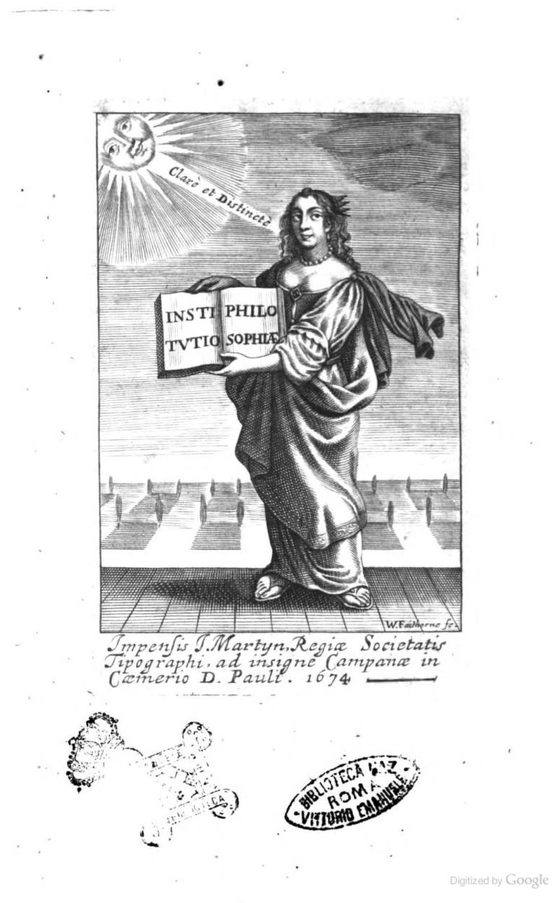
Engraved frontispiece: a robed figure holding a book titled Institutio philosophiae, under a radiant sun.
Frontispiece to Antoine Le Grand’s Institutio philosophiae (London, 1675), the British text of c. 1675.